
Support at Home
The Support at Home program was introduced on 1st November 2025, replacing the Home Care Packages Program and the Short-term Restorative Care Programme. It improves access to services, products, equipment, and home modifications to help you remain living independently at home for longer.
What is the Support at Home program?
The Support at Home program is a major reform by the Australian Government to improve in-home aged care. It will replace the Home Care Packages Program and the Short-Term Restorative Care Programme from 1 November 2025, with the Commonwealth Home Support Programme (CHSP) joining no earlier than 1 July 2027.
This new program brings together existing in-home aged care services into a single, streamlined system designed to help older Australians live independently, safely, and comfortably in their own homes for longer.
Under Support at Home, older people will have access to:
Clinical care (e.g., nursing, physiotherapy, occupational therapy)
Independence supports (e.g., personal care, transport, respite)
Everyday living services (e.g., cleaning, gardening, meal preparation)
Short-term supports, including:
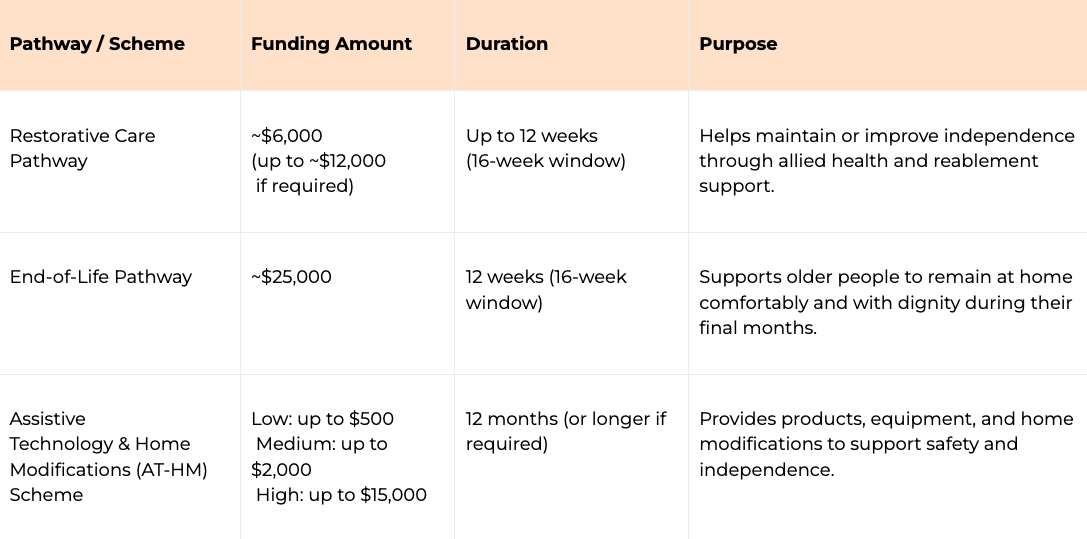
The Restorative Care Pathway (up to 16 weeks of allied health support)
The Assistive Technology and Home Modifications (AT-HM) scheme (up to $15,000 for equipment or home changes)
The End-of-Life Pathway (up to $25,000 for care in the last 3 months of life)
View the full Support at Home Service list.

Why it matters
The reform responds to recommendations from the Royal Commission into Aged Care Quality and Safety and aims to make aged care simpler, fairer, and more person-centred. It introduces:
A single assessment system to make access easier.
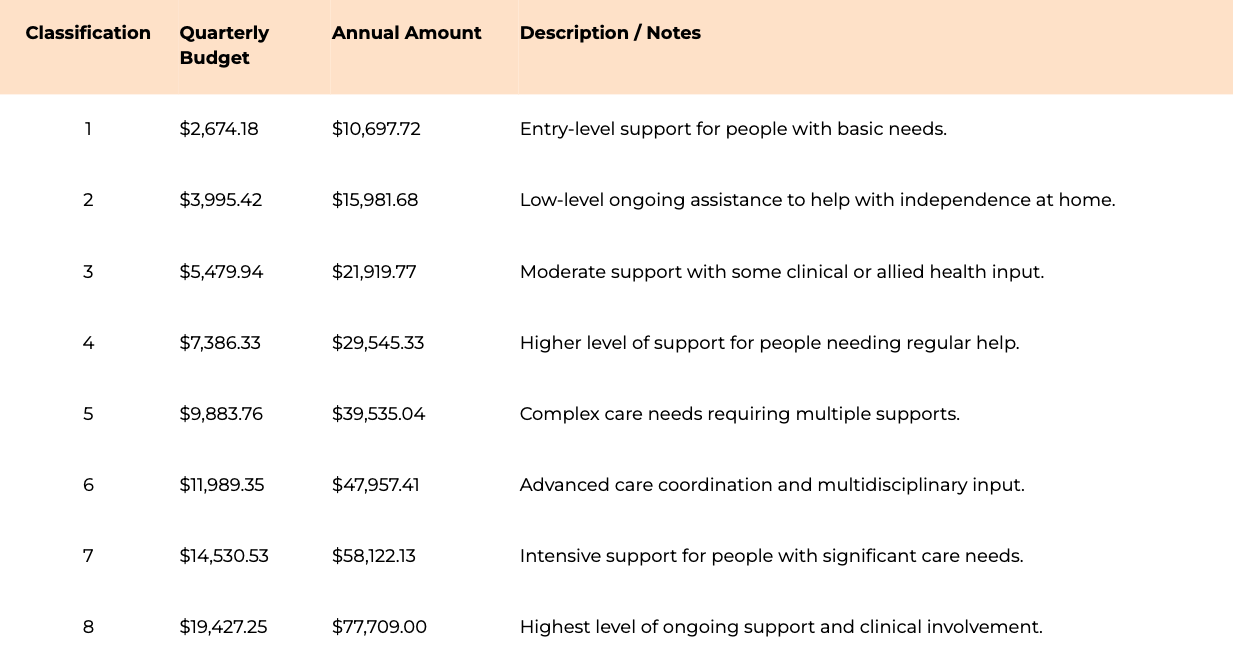
Quarterly budgets for flexibility and transparency.
Equitable contribution rates, ensuring those with greater means contribute more, while full pensioners pay little or nothing for clinical care.
Better access to early intervention and restorative care, helping people stay active and avoid hospital or residential care.
Navigating the Aged Care system under Support at Home
Older Australians and their families can start by contacting My Aged Care - the national entry point for aged care services.
Check eligibility: Visit MyAgedCare.gov.au or call 1800 200 422 to arrange an assessment.
Get assessed: A trained assessor will visit your home to understand your needs and goals.
Receive your plan: If eligible, you’ll receive a Notice of Decision and a Support Plan outlining your approved services and budget.
Choose a provider: Use the Find a Provider tool on My Aged Care to select a registered provider who can deliver your services.
Review & adjust: You can request a re-assessment if there are changes to your individual needs.
Classifications and Budgets
Short-Term Classifications
Read more: Assistive technology and home modifications list
Read more: Support at Home End-of-Life Pathway
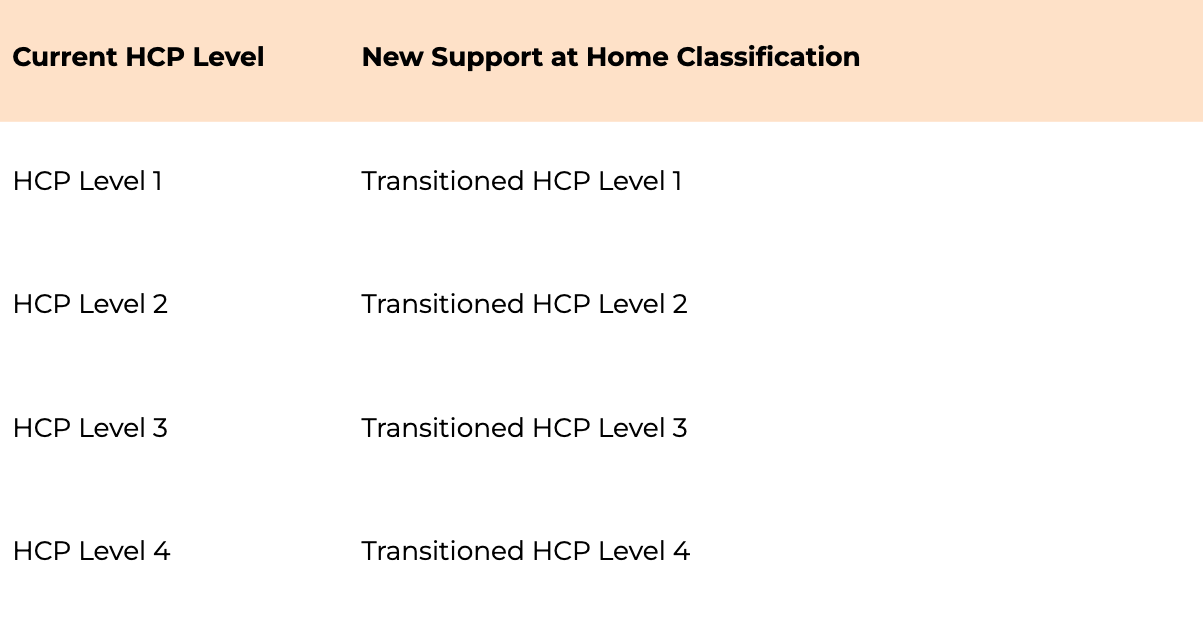
Transition from Home Care Packages to Support at Home
What will Support at Home cost?
The government will fund 100% of your clinical care costs, and a percentage of the cost of everyday living supports and services that help you maintain your independence at home.
A lifetime cap of $130,000 means you will not pay more than $130,000 towards the cost of non-clinical services, whether you receive them in-home or in a residential aged care facility.
Co Contribution Fees
Clinical Care
The government will fund 100% of the cost of clinical care for all Support at Home recipients.
Independence
How much you need to contribute ‘out of pocket’ for independence support will depend on which services you receive, as well as your assets and income.
A full pensioner will pay 5%
A part pensioner will pay between 5%-50%
A self-funded retiree will pay 50%
Everyday living
How much you need to contribute ‘out of pocket’ for everyday living support will depend on which services you receive, as well as your assets and income.
A full pensioner will pay 17.5%
A part pensioner will pay between 17.5-80%
A self-funded retiree will pay 80%
Read more: Understanding contributions and fees for the Support at Home program
How to Apply
To be eligible for Support at Home you must be:
aged 65 years or over (50 years or older for Aboriginal and Torres Strait Islander people)
living at home (not in residential aged care)
an Australian citizen or permanent resident
assessed by My Aged Care as someone who needs home care services.
You can quickly check if you’re eligible using My Aged Care’s online eligibility checker.
You can organise an assessment by calling My Aged Care on 1800 200 422 or apply online here: Apply for an aged care assessment.
A doctor or other health professional can also refer you to My Aged Care for an assessment.
Read more: How to apply for an assessment
Testimonials
-
Ev has moved mountains for my mother who was left with no support due to ‘stretched’ and ‘unsupportive’ regional Aged Care Providers. Evelyn advocated for her and she now receives more than adequate support and assistance allowing her to fully use her budget, the first time in many years. Thank you Ev.
— K. R
-
I would like to say what a Sincere, Hard Working Woman Ev is. She always goes above and beyond to make sure all of our needs are met. Ev is so Kind & Caring & has exhibited this on numerous occasions. At this extremely tough time in our lives I am more than Happy & Fortunate to have Ev's Support.
— Wendy J
-
I have been with this team for several months and have never been so professionally and so well supported thanks to Evelyn Gough who has been brilliant. With her valuable assistance I have been able to get support to greatly improve my life at home.
— Del R

Get in Touch
Let’s talk about what matters to you - because every family’s journey is different.
Book a free consultation to find out how we can support yours.